
CBO Travel


Discover Berlin’s modern chic, Potsdam’s rococo whimsy and Prague’s Gothic exuberance. Walk in Martin Luther’s footsteps in Wittenberg, birthplace of the Protestant Reformation. Admire delicate Meissen porcelain. Celebrate Dresden, a phoenix risen from the ashes of war. View Saxon Switzerland’s monoliths. See the Elbe Biosphere Reserve. The Elbe is one of Europe’s most unspoiled rivers and it awaits you—on our 10-day cruisetour.
 Standard From $5,699 CAD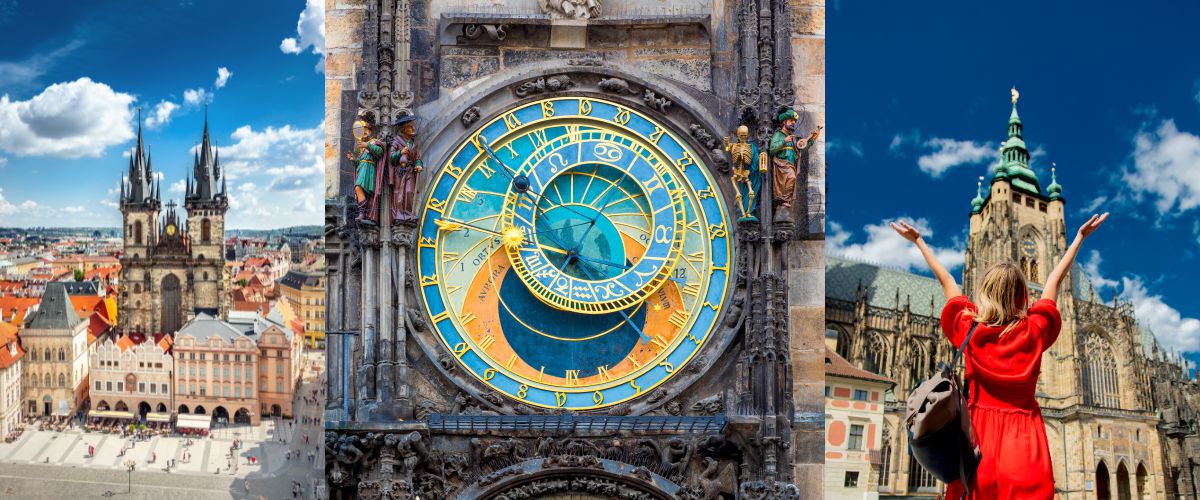
Day 1 — Prague, Czech Republic
Tuesday, March 30, 2027
Arrive and check in to your hotel. Prague is known as the “City of a Hundred Spires” and it is easy to see why. The towering twin steeples of Týn Church and the beautiful baroque Church of St. Nicholas are among some of the city’s most notable. Best explored on foot, Prague’s Old Town is a maze of ancient cobblestone lanes with the Old Town Square at its core. Here, the medieval Astronomical Clock still chimes today and provides for its viewers a little theater with the “Walk of the Apostles” on the hour, every hour.
Day 2 — Prague, Czech Republic
Wednesday, March 31, 2027
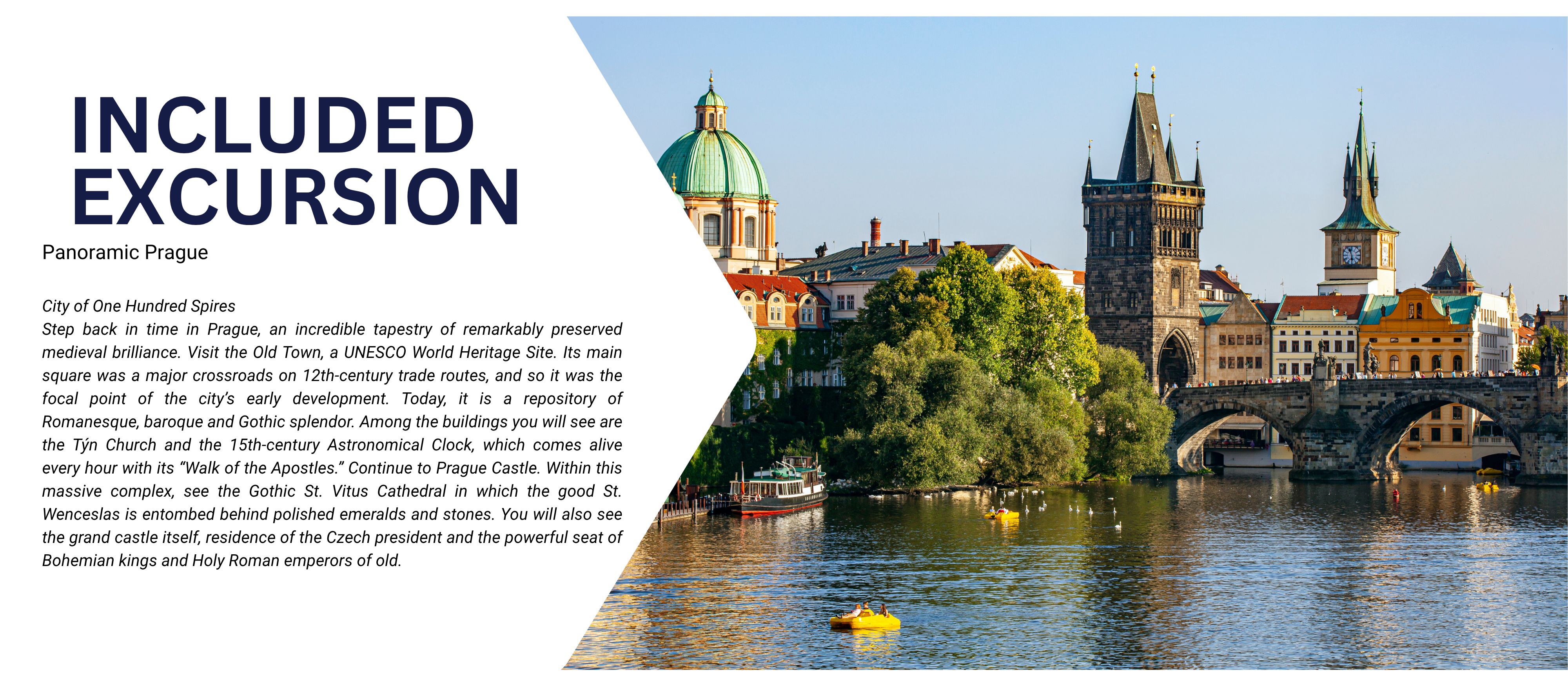
Few cities embody the past as authentically as Prague, the Czech Republic’s atmospheric capital on the Vltava River that clings to its history with unwavering passion. Prague’s medieval architecture is its most prominent, but the city is also a rich repository of Romanesque, baroque and art nouveau buildings that stir the imagination. The city’s graceful, pedestrian-only Charles Bridge served as the coronation route of the kings of Bohemia across the river to Hradčany Castle and its rich complex of royal buildings.
Day 3 — Děčín, Czech Republic
Thursday, April 1, 2027
Prague, Czech Republic
After breakfast, check out of your hotel and begin your journey to your embarkation city. Since the invention of Pilsner in 1842, the Czechs have been recognized for their beer-brewing expertise, bringing famous brands such as Staropramen and Budějovický Budvar to Europe and beyond. Today, a thriving culture of microbreweries can be found in Prague, producing beers in varying degrees of strength and color, from pale to amber and dark to black. The frequent clinking of glasses to the cry of “Na zdraví!” can be heard in bars and cafés across Prague as locals raise a toast to each other.
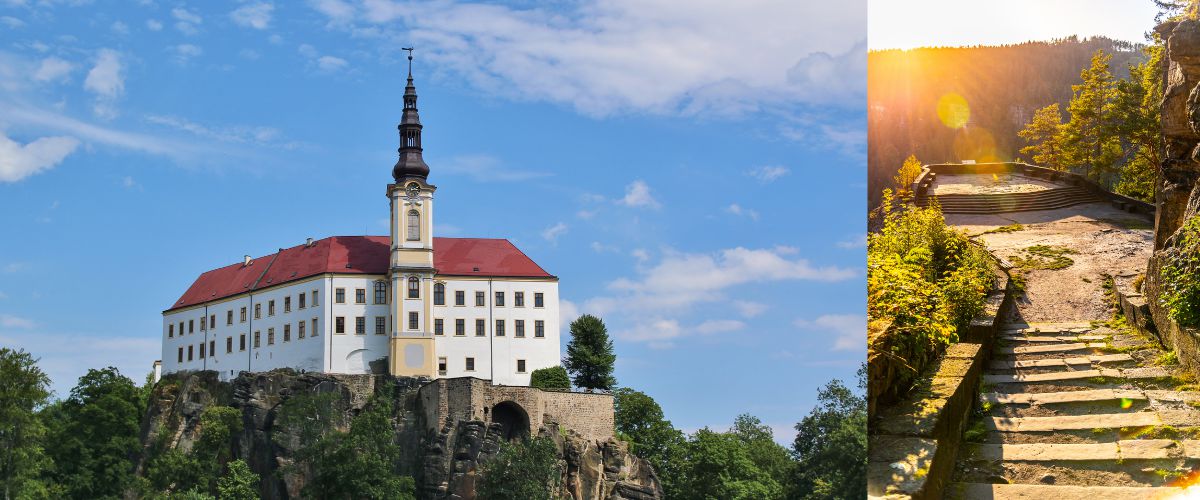
Děčín, Czech Republic
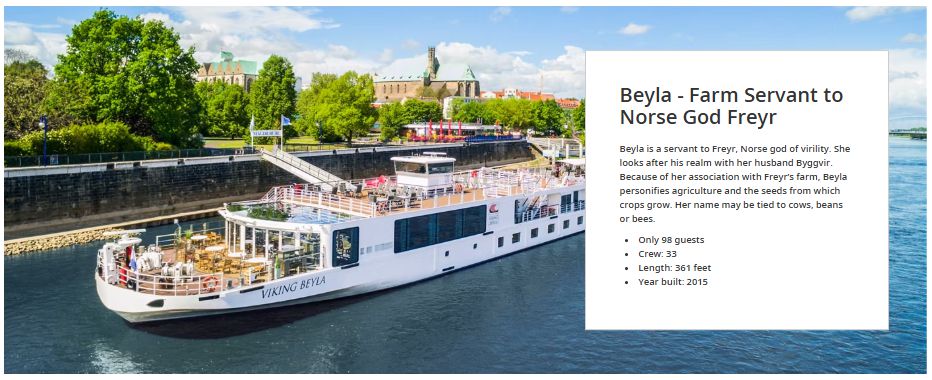
The Czech town of Děčín enjoys a pastoral setting amid green hills. The 13th-century king of Bohemia Ottokar II invited northern neighbors to settle here, forever giving the town a German flair. Though the 1945 Potsdam Agreement expelled postwar Germans, Děčín embraces its heritage in many of its architectural treasures, including its namesake castle and the 1906 buttercream- and azure-colored synagogue, the only surviving structure of its kind in the former Sudetenland. Děčín’s elegant beauty was inspiration for Polish composer Frédéric Chopin. Embark your ship and settle into your stateroom.
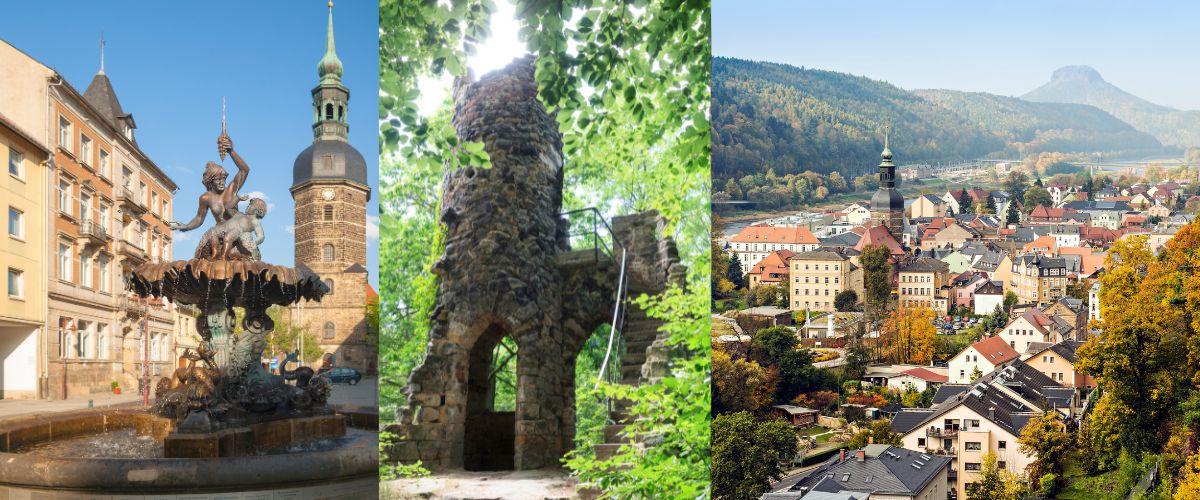
Day 4 — Bad Schandau, Germany
Friday, April 2, 2027
Bad Schandau, Germany
One of the oldest and most important spa resorts in Saxon Switzerland, the beautiful resort city of Bad Schandau has retained much of the splendor and charm of bygone ages. After iron-rich springs were discovered here in the mid-18th century, hotels and spa houses soon dotted the landscape. In 1920, the town (then Schandau) was awarded the right to use the prefix “Bad,” meaning “Spa.” For refugees and emigrants during World War II, this was a place of hope. Many were helped to safety by climbers who knew secret passes through the mountains and out of Germany.
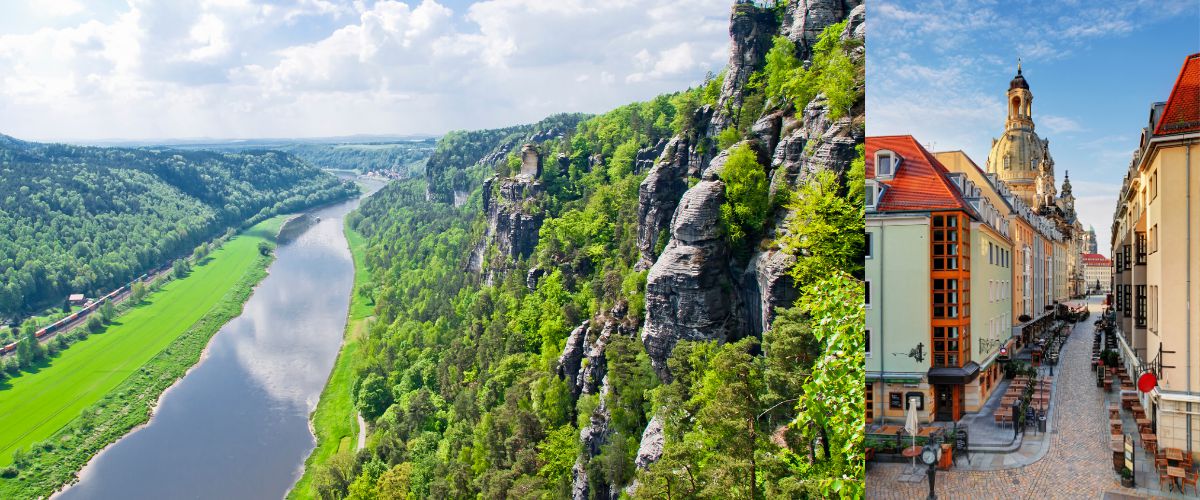
Scenic Sailing: Saxon Switzerland
Sail through the magnificent, soaring rock formations of Saxon Switzerland. This spectacular region earned its name from two Swiss painters who were reminded of their home while visiting. You will witness some of the wildest cliff formations imaginable, with nicknames such as Catapult, Locomotive and Wolf’s Ravine. As you pass through, marvel at the Bastei, a 1,000-foot spectacle of tooth-like rocks connected by a footbridge. Sailing past these iconic monoliths is sure to be a highlight of your journey.
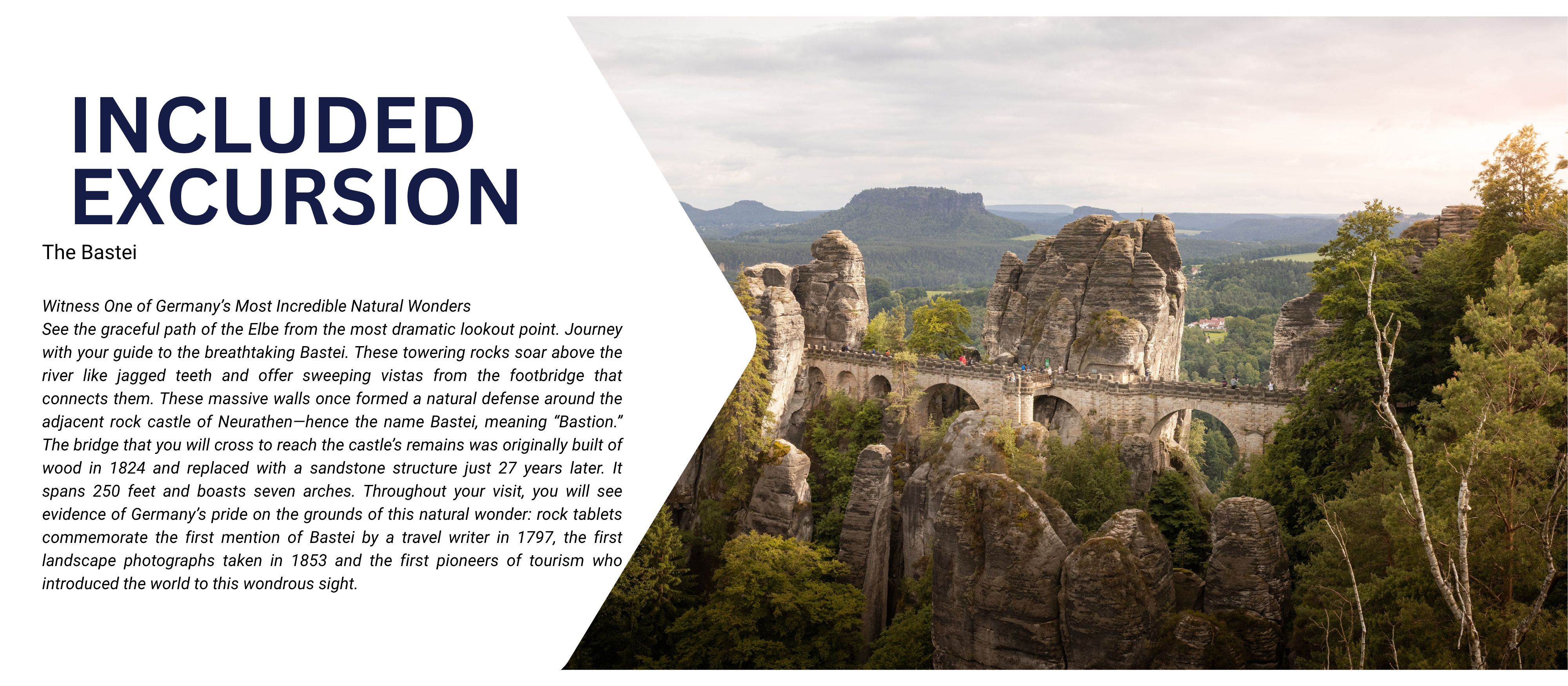
Dresden, Germany
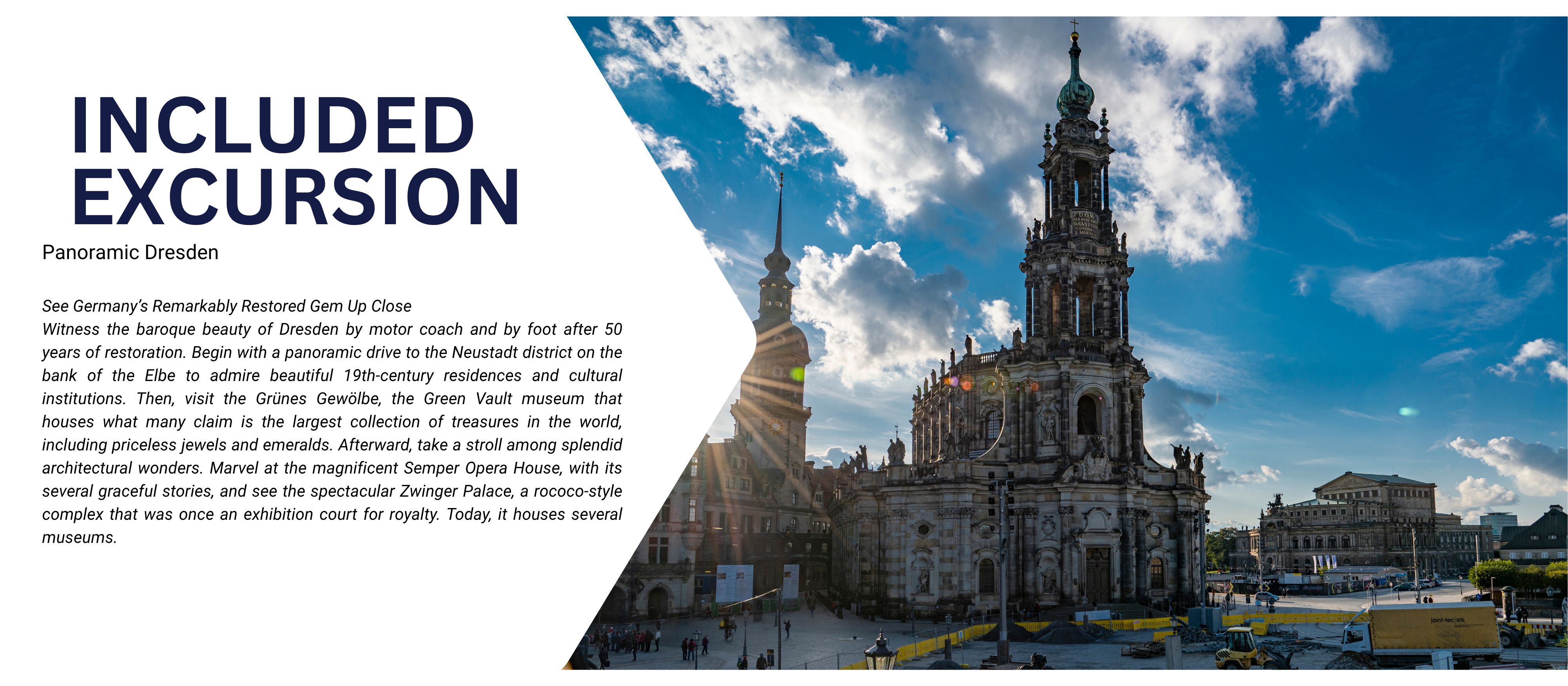
Dresden is awash in artistic treasures and baroque splendor. The city is blessed with water meadows and green parks near the center, giving it a wide-open feeling and making it easy to focus on the beautiful sandstone buildings that line the river. It took Dresden more than 50 years to rebuild after it was devastated during Allied bombing. Most agree it was certainly worth the wait. The city has been lovingly restored to its original glory, from the ornate Frauenkirche (Church of Our Lady) and grand Semper Opera House to the shining Zwinger Palace.
Day 5 — Dresden, Germany
Saturday, April 3, 2027
The scent of gingerbread, aromatic glühwein and roasted chestnuts has been filling the air of Dresden’s Old Market Square since the mid-15th century. Traditional crafts, such as Ore Mountain folk art, Lusatian blue-printed fabrics and Moravian stars, are popular gifts, as is the city’s famous Dresdner Christstollen, a delicious spiced fruit loaf. Each year, a festival dedicated to the regional specialty takes place, where a giant stollen weighing several tons is presented to the town and sold to raise funds for charitable causes.
Day 6 — Meissen, Germany / Torgau, Germany
Sunday, April 4, 2027
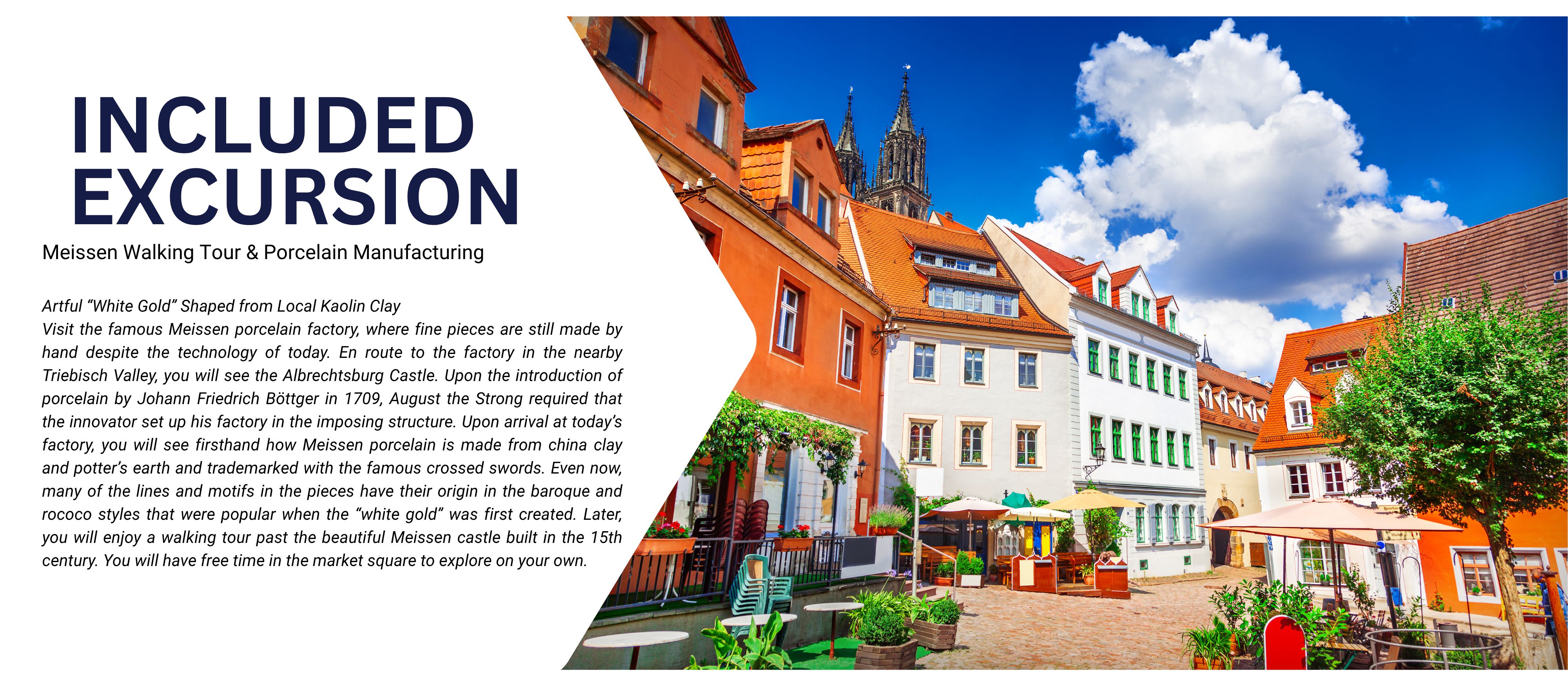
Surrounded by idyllic wine villages and set at a rocky spur on the Elbe, Meissen dates back more than a thousand years. The city is dominated by its 13th- and 14th-century Gothic cathedrals and Albrechtsburg Castle, perched on a low hill, considered one of the great achievements of German architecture. The introduction of porcelain here by Johann Friedrich Böttger in the early 18th century made Meissen world famous. Meissenware has been produced here ever since. Across the city, the chimes of the Gothic Church of Our Lady’s bells can be heard; they were the first church bells made of porcelain.
Day 7 — Wittenberg, Germany
Monday, April 5, 2027
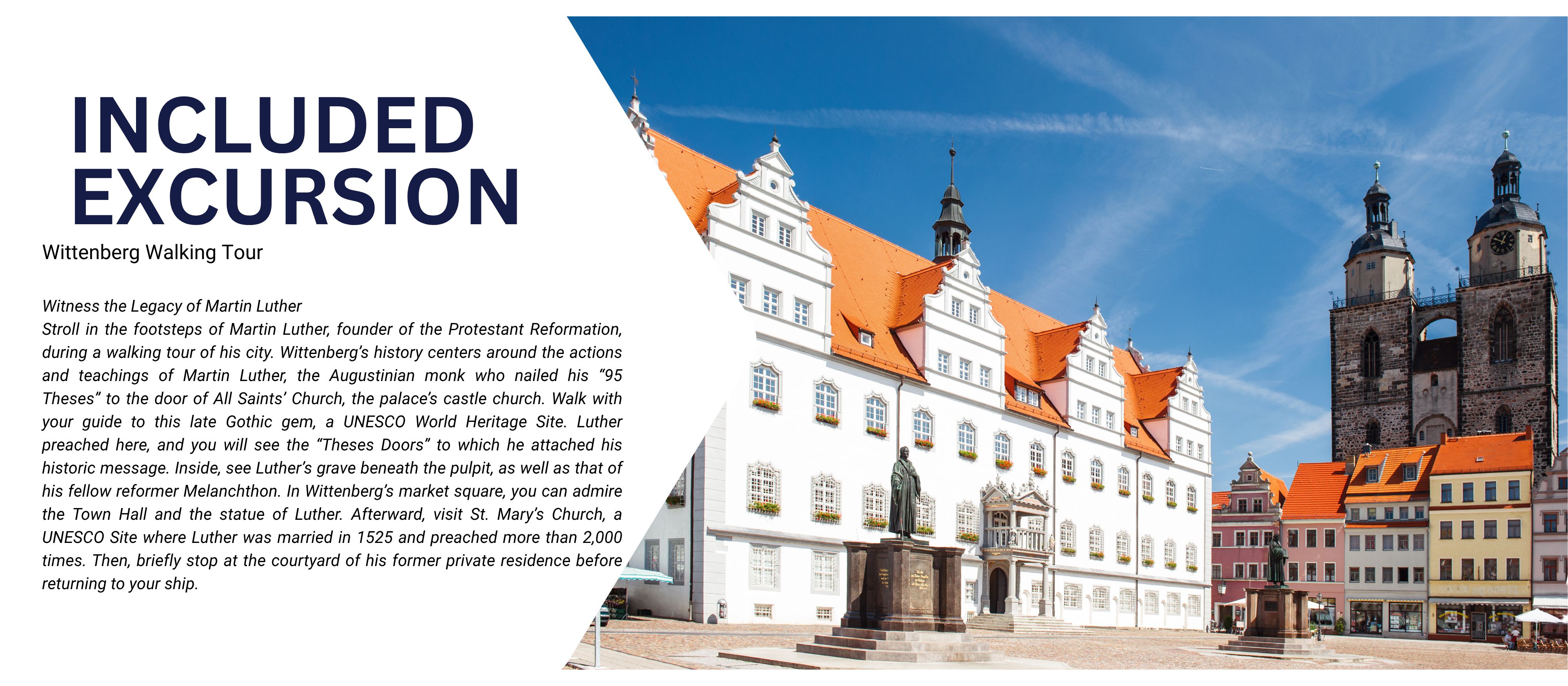
Wittenberg is an important center of culture and learning, known mostly as the birthplace of the Protestant Reformation. It was here that the Augustinian monk Martin Luther famously nailed his “95 Theses” against the selling of indulgences to the door of the palace church in 1517, launching the spread of a new religious movement throughout Europe. Wittenberg’s incredibly preserved Old Town was spared destruction during World War II, and so its charming houses remain as they have for centuries, with those in the market square huddled around the beloved statue of Luther.
Day 8 — Potsdam, Germany
Tuesday, April 6, 2027
Potsdam, Germany
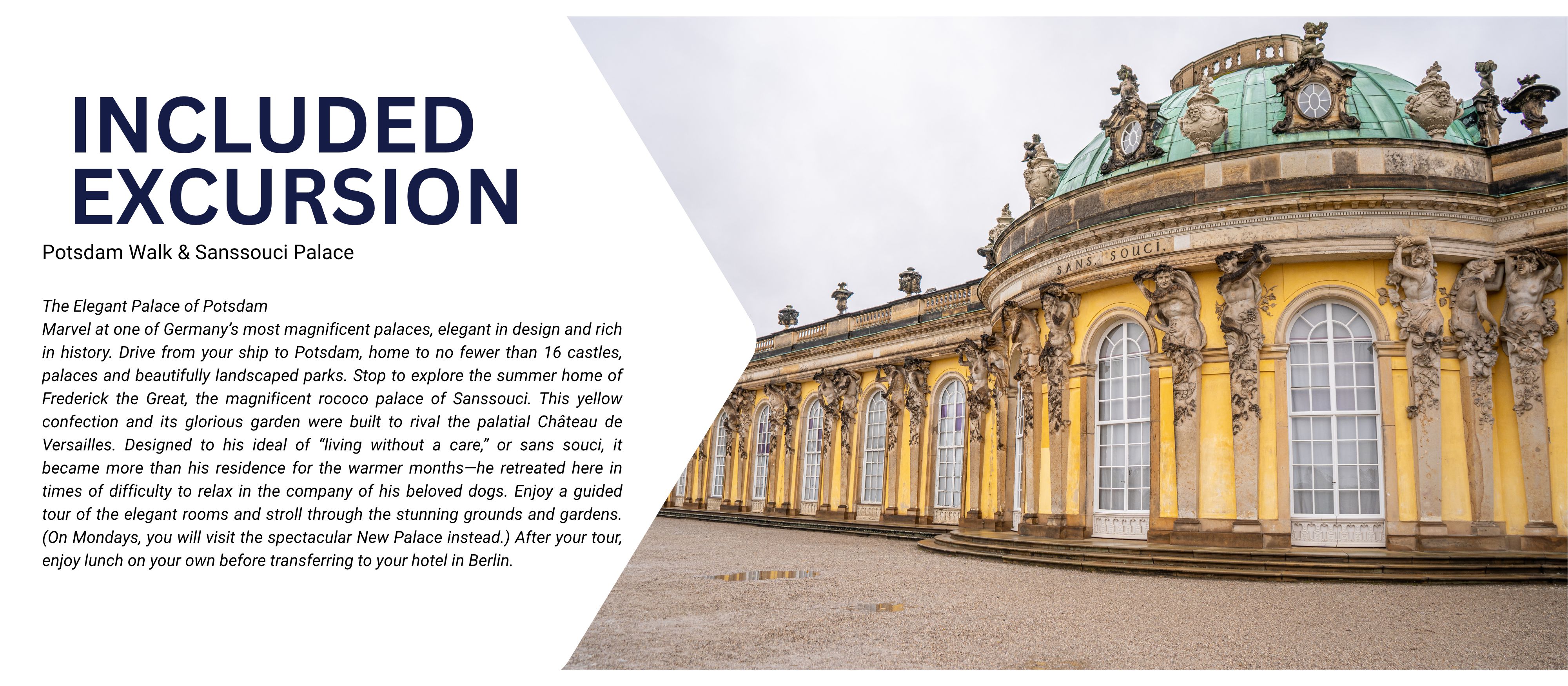
After breakfast, disembark your ship and transfer to your destination. Potsdam straddles one of the Elbe’s main tributaries, the Havel River. It boasts a rich history that spans more than 1,000 years. From its humble beginning, Potsdam burgeoned into a royal city, hosting the residences of Prussian and German rulers until the early 1900s. A series of tumultuous events followed, but through it all, Potsdam maintained its prominent stature. And in 1990, with Germany’s reunification, Potsdam was named Brandenburg’s state capital. Today, the city’s regal past lives on in its 16 well-preserved palaces and three elegantly landscaped parks.
Berlin, Germany
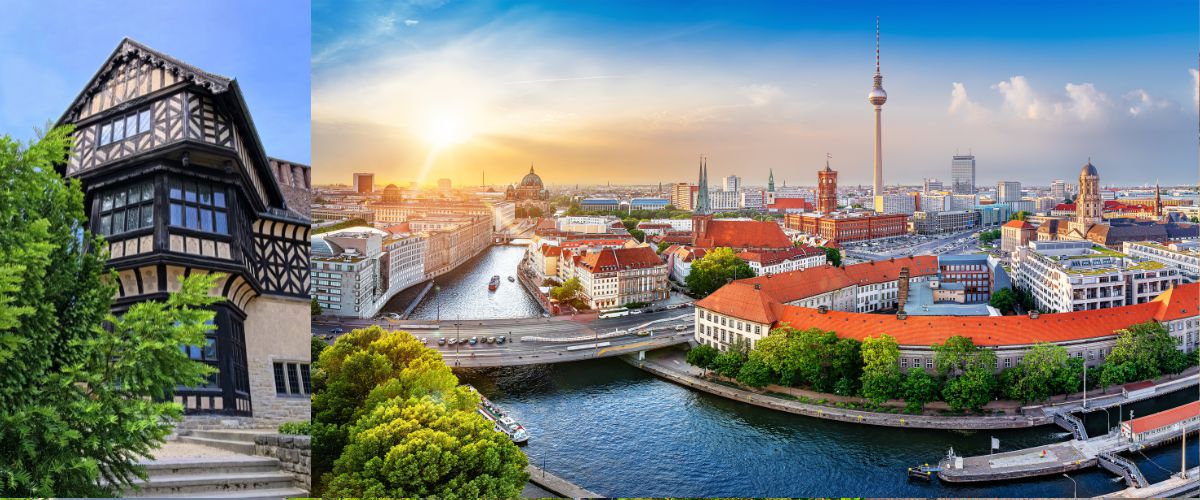
Arrive and check in to your hotel. After a decades-long postwar rift, Germany’s capital has been reunified and undergone a remarkable rebirth as a center of art, culture and great architecture. It is still riding the wave of its newfound energy, and exploring its streets feels akin to browsing a newly opened museum. Risen from the ashes of war, many of its buildings that once stood for division now embrace unity. Among them, the Reichstag parliament building embodies a new transparency with its glass dome, and the city’s Museum Island celebrates self-expression and creativity.
Day 9 — Berlin, Germany
Wednesday, April 7, 2027
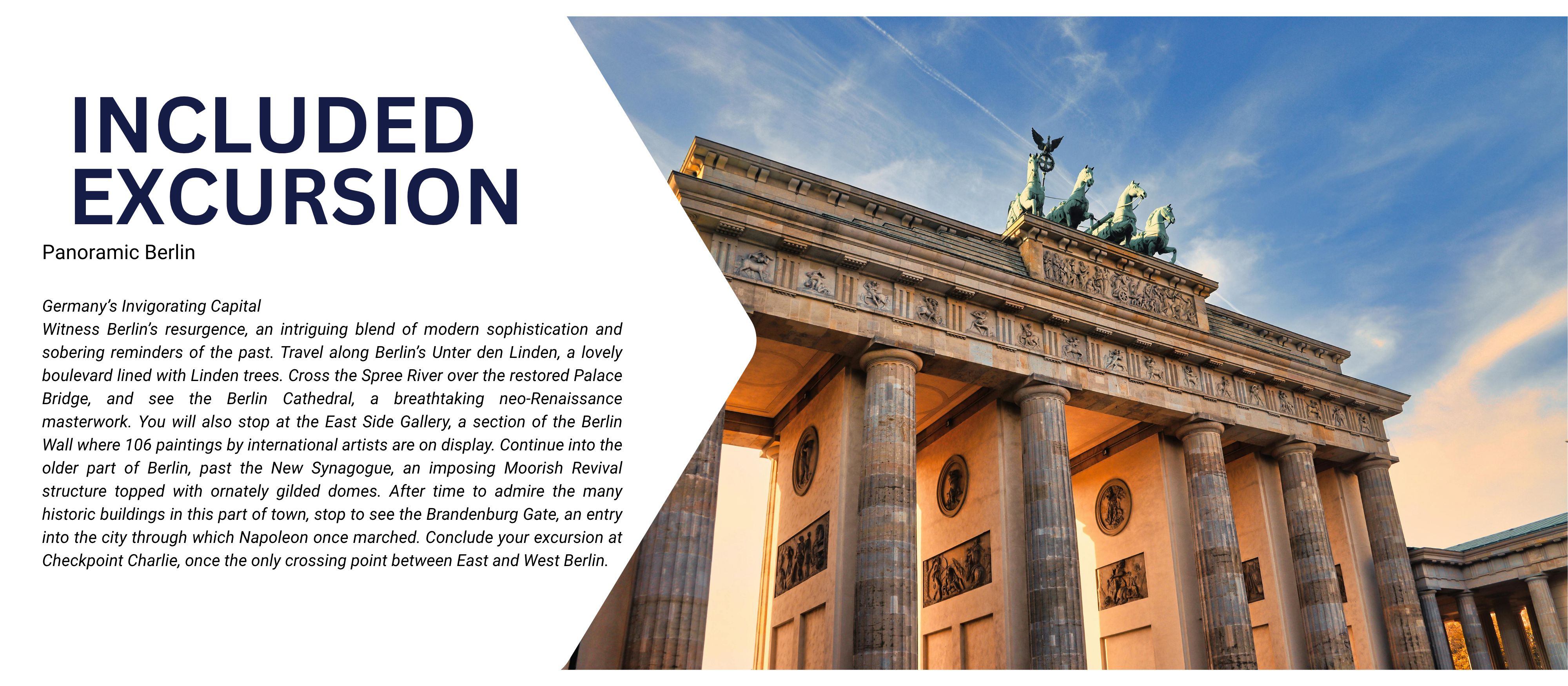
Berlin is one of Europe’s most cosmopolitan and forward-thinking capitals. When the Berlin Wall fell in 1989, a sweeping transformation took hold and is powerfully symbolized in the Reichstag, Germany’s parliament building. Monuments of wartime are everywhere here, from remnants of the wall to Checkpoint Charlie. Prewar treasures include the baroque Charlottenburg Palace and 13th-century St. Nicholas Church. Straddling the Spree River and peppered with grand theaters and more than 170 museums—many of them on Museum Island—today’s Berlin is a major cultural center.
Day 10 — Berlin, Germany
Thursday, April 8, 2027
Bid farewell to your fellow guests and journey home. Or spend more time exploring, perhaps joining one of our extensions.